Our Story
God With Us, Every Step of the Way
From a living-room Bible study in West Brookfield to a lasting home at St. Mary's in Brookfield, the story of Emmanuel is a story of seeking — and finding — the fullness of the ancient Christian faith.
Chapter One
Origins and Vision
West Brookfield · 2002
In the winter of 2002, in the quiet New England town of West Brookfield, Massachusetts, a vision began to take root — one that would eventually give rise to Emmanuel Orthodox Church. At its heart stood a newly ordained priest of the Charismatic Episcopal Church (CEC): Father Kenneth DeVoie. Then thirty-seven years old, Fr. Ken was a man of fearless conviction, deep trust in God's providence, and unwavering confidence in his call to plant a regional church that would minister to the Brookfields and surrounding towns.
A graduate of Gordon-Conwell Theological Seminary in Boston, where he earned his Master of Divinity, Fr. Ken's theological formation was both rigorous and deeply personal. His early vocational path had been toward the Episcopal Church, and he was already slated for ordination within that communion. Yet, as the Episcopal Church began to embrace increasingly liberal theological positions, DeVoie found himself unable to reconcile his convictions with the direction the denomination was taking. His conscience, anchored in the historic, orthodox, and Trinitarian faith, compelled him to seek a different path — one that preserved the authority of Scripture, the power of the Holy Spirit, and the sacred continuity of the ancient Church.
It was in the Charismatic Episcopal Church that he found this balance. The CEC sought to unite the great streams of Christian tradition — Evangelical, Charismatic, and Sacramental — combining the passionate preaching of the Protestant revival with the mystical depth and liturgical beauty of Catholic worship. This integration resonated deeply with Fr. Ken's theological convictions and pastoral heart.
The seed of Emmanuel Church was planted not in a cathedral, but in a home Bible study. Meeting in the living room of the DeVoie family home, a handful of believers — no more than half a dozen — gathered weekly around Scripture, prayer, and fellowship. As the small circle grew in faith and friendship, a shared conviction emerged: that this humble study should one day become a parish.
Behind the scenes of this unfolding vision stood a quiet yet indispensable figure — Sharon DeVoie, Fr. Ken's wife. From the very beginning, she was wholeheartedly committed to the call, not as a passive supporter but as an active partner in the ministry's birth. Her professional career provided the financial stability that allowed Fr. Ken to devote himself fully to the demanding work of planting a church. Together with their two children — Emily and Ben — the DeVoie family became a living embodiment of faith, sacrifice, and shared purpose.
Out of those early evenings of prayer and Scripture study emerged Emmanuel Church — its name meaning “God with us.” It was more than a name; it was a proclamation of faith and a declaration of purpose. In the providence of God, through the courage of a priest and the quiet heroism of his wife, a new community was born — rooted in Scripture, filled with the Spirit, and nourished by the Sacraments.
Chapter Two
The Train Station
A Humble and Holy Beginning
Father Kenneth DeVoie was a man of many dimensions. A former member of the United States Coast Guard, he brought to ministry the steadiness and courage of someone who had faced storms both literal and spiritual. Yet beneath his rugged exterior was a gentle and approachable soul — intelligent, humorous, and compassionate. His faith was not austere or performative; it was lived. He could bow his head in reverent prayer and later share a beer and a story without a trace of contradiction. He was a pastor who understood that holiness was not separation from life but its sanctification.
His authenticity drew people in. Within six months of that first Bible study, the small circle of believers had nearly doubled, growing to about a dozen regular attendees. Many were men, drawn to Fr. Ken's down-to-earth leadership. Recognizing this, he began a men's fellowship group that met in his home, helping men understand the Christian life not as a static belief system but as an ongoing internal battle against pride and sin, a discipline of learning humility. This men's group became one of the early cornerstones of the community's life.
Even before a permanent location was found, Holy Mass was already being celebrated in the DeVoie home. A dining table served as an altar, folding chairs as pews, and the living room became a sacred space. There, the Eucharist was celebrated for the first time, and Emmanuel's sacramental life began to take form.
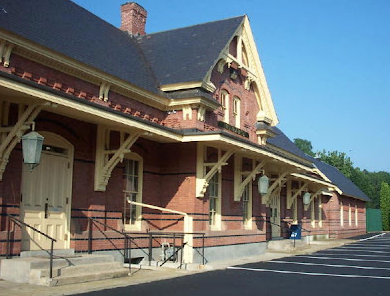
As the fellowship expanded, the need for a public place of worship became apparent. With the blessing of Bishop Craig Bates, providence directed them to an unexpected setting — an historic train station in the heart of West Brookfield, newly remodeled in 2002, retaining its vintage charm of wooden beams and wide-plank floors. Here Emmanuel held its first public worship services. On Sunday mornings, as the faithful gathered for Holy Mass, trains would roar past, their sound reverberating through the old walls. But the congregation barely noticed. Their eyes were fixed not on what passed by outside, but on what God was building within.
It was during this period that Fr. Ken filed the official documents with the Commonwealth of Massachusetts, incorporating Emmanuel Church as a nonprofit religious organization. Emmanuel was no longer simply a group of worshipers; it was an organized, consecrated parish with a mission and a future. The “train station era” became a cherished memory — a season of humility, perseverance, and joy.
Chapter Three
George Whitfield Methodist Church
A Space That Felt Like a Church
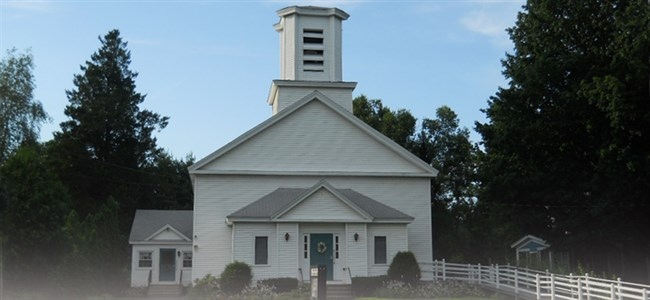
After about a year worshiping at the train station, it became clear that it was time for a change. As Fr. Ken would later recall, “It's hard to convince people to come to church in a train depot.” Emmanuel remained small — around fifteen members — and lacked the resources to purchase property. But Fr. Ken possessed a rare combination of faith and perseverance. After several polite refusals, he found success with the George Whitfield Methodist Church in downtown West Brookfield, persuading its leadership with a bold commitment to offer a $1,000 monthly stipend.
Because the Methodist congregation already worshiped on Sunday mornings, Fr. Ken took inspiration from the Roman Catholic parish model and introduced a Saturday evening Mass at 4:30 p.m. The new sanctuary, though small, was ideal. Its intimacy created warmth and togetherness, and for the first time, Emmanuel worshiped in a space that looked and felt like a church.
During this period, the music ministry blossomed under the leadership of Mark McGrail, a local musician with a rich voice and a heart for worship. Accompanied by his guitar, he led the congregation in contemporary hymns that filled the sanctuary with beauty and sincerity. For many, the sound of his voice became synonymous with Emmanuel's soul — a reminder that worship was not a performance, but a prayer.
It was also during this time that Fr. Ken introduced the Alpha Course, a dynamic outreach program developed by Rev. Nicky Gumbel. Each session began with a lovingly prepared meal, soft lighting, and quiet background music. In a simple but profound gesture, Fr. Ken began the first session in casual clothes, blending in among the guests, then each week added a small piece of his clerical attire until, by the end of the course, he stood before them fully vested as a priest. This subtle transformation symbolized the journey of faith itself. Alpha became one of the parish's most successful ministries, bringing many to Christ.
Under the power of the Holy Spirit, Emmanuel grew from a handful of believers to a congregation of seventy-five to eighty members, with forty to fifty attending Mass weekly. But what defined Emmanuel most deeply was not just its worship — it was its heart. When a parishioner fell into financial crisis, the church gathered around her with both financial help and spiritual restoration. When a struggling family was found to have no washing machine, Emmanuel quietly delivered a new one — no announcements, just love in action. When a mother of five faced foreclosure less than twenty-four hours away, the church pooled its resources and saved the home. Time and again, Emmanuel became the hands and feet of Christ, living out the very meaning of their name: God with us.
Chapter Four
The Church on the Hill
Warren · Summer 2007
By the mid-2000s the warmth that had once characterized the shared arrangement with George Whitfield Methodist Church began to cool. Emmanuel had outgrown the modest sanctuary. Attendance regularly filled the pews, the Alpha courses overflowed the hall, and the building felt less like a borrowed space and more like a second home — one the Methodist congregation increasingly experienced as an encroachment. Fr. Ken recognized the tension for what it was: not hostility, but the natural friction of a living body pressing against the limits of its temporary dwelling. The time had come to seek a permanent home.
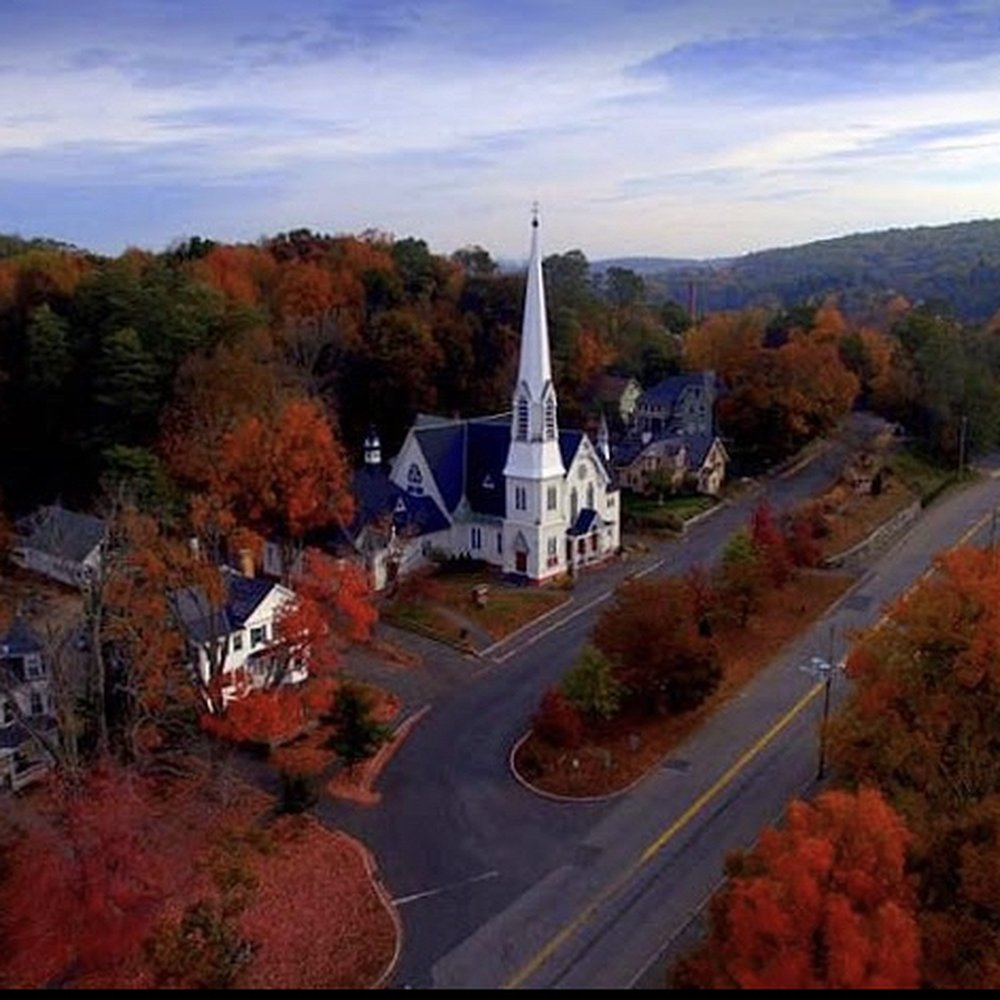
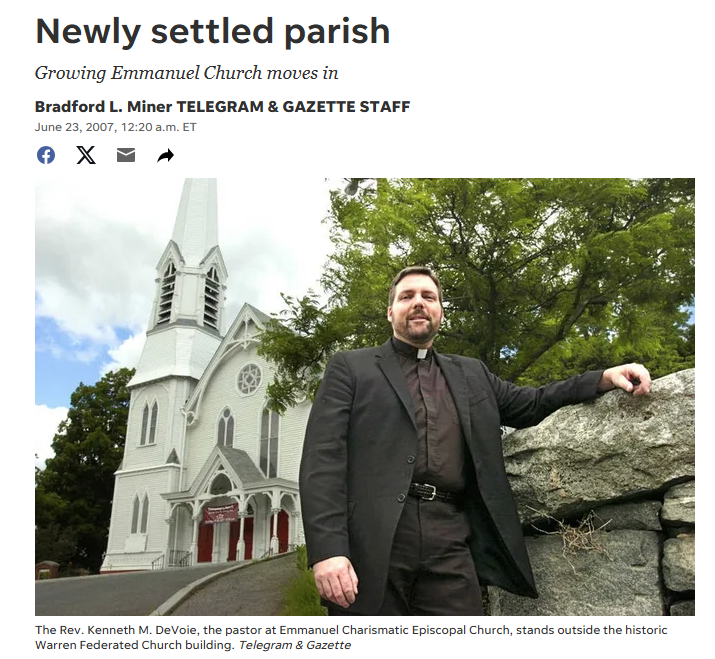
The search was patient and prayerful. Then, in the spring of 2007, word reached the parish that the large historic Warren Federated Church, standing on the hill in the center of Warren, Massachusetts, was closing its doors. The building was substantial and dignified — a white steeple rising above the surrounding houses, a wide sanctuary, and the quiet authority of a place that had already weathered more than a century of New England winters. After prayer and sober discussion, the council voted to offer $175,000. The offer was accepted, and in a single decisive moment, Emmanuel moved from tenant to steward.
What followed was a season of joyful labor. Men and women, teenagers and grandparents arrived with tools, paintbrushes, and quiet determination. An altar area was carefully constructed and vested with the dignity the Eucharist required. The fellowship hall was rebuilt into a warm, welcoming space; a side chapel was created for smaller services; and in the basement, volunteers transformed dusty storage into a bright conference room and classrooms. Sawdust mixed with hymn tunes. The building itself seemed to respond — its old bones accepting the new life being given to it.
At 10 a.m. on Sunday, July 8, 2007, the doors of the church on the hill opened for Emmanuel's first service in its new home, followed by a joyful reception. Three days later, at 7 p.m. on July 11, the building was consecrated. Father Kenneth DeVoie stood at the newly built altar; beside him served Deacon Chris. The sanctuary was full — fuller than any space the parish had yet known. The air carried the scent of fresh paint and beeswax, the sound of Mark McGrail's guitar and the congregation's voices rising together. What had begun in a living room, continued in a train station, and grown in a borrowed sanctuary now stood on its own foundation. It was a glorious day.
In the years that followed, the parish thrived in its new home. The larger sanctuary allowed worship to breathe. The practical mercy that had defined the earlier years only expanded — quiet financial help, rides to medical appointments, meals delivered without announcement, and the same refusal to let anyone walk alone. The church on the hill stood as both destination and beginning: the place where a vision first planted in a West Brookfield living room took permanent root.
Chapter Five
The Call of the Fathers
A Question of Truth · 2007
As Emmanuel settled into its new home on the hill, a deeper and more urgent question began to press upon the hearts of Father Kenneth DeVoie and Deacon Chris. It was not a question of growth or buildings or programs. It was a question of identity and truth: What does it mean to be truly catholic? What does it mean to stand in continuity with the apostolic Church?
Fr. Ken had long been convinced that genuine catholicity required more than sincere belief or liturgical form. It required communion with valid apostolic succession — an unbroken line of ordination stretching back to the Apostles themselves. Together with Deacon Chris, he began a sustained investigation into the claims of apostolic Christianity. The deeper they read, the clearer the picture became: the Charismatic Episcopal Church's assertion that it was fully Catholic could not be sustained, for there was no demonstrable, historically continuous apostolic lineage connecting it to the ancient Church.
A careful reading of the Church Fathers only sharpened the conclusion. The One, Holy, Catholic, and Apostolic Church of the Creed had, from the earliest centuries, been found in two primary expressions: the Church of Rome and the Church of Constantinople. Fr. Ken wrote a series of careful papers and presented them to Bishop Craig Bates, calling the entire movement to seek reception into either Rome or Constantinople. The papers were received, but no institutional change followed.
Further study brought Fr. Ken to a more precise conviction: the fullness of the Christian faith — the unchanging faith of the Fathers, the unbroken sacramental life, the ascetic and mystical tradition — was preserved most completely in Eastern Orthodoxy. He offered to resign as pastor and pursue reception into the Orthodox Church on his own, leaving the parish free to remain where it was.
The parish, however, had been walking the same path with him. When the moment of decision came, the majority made clear that they wished to become Orthodox together. In late 2007 a formal vote was taken to petition the Antiochian Orthodox Church for reception of the entire parish, and the request received the approval of Metropolitan Philip. By December 2007, Father Kenneth and Deacon Chris had submitted their resignations to the CEC. On a single day, approximately eighty souls were brought into the fullness of Holy Orthodoxy. On November 13, at St. George Cathedral in Worcester, they stood before His Grace Bishop Antoun of blessed memory, and Father Kenneth was ordained to the priesthood for Emmanuel Orthodox Church.
Chapter Six
Learning to Walk
A Season of Pruning
The reception into Holy Orthodoxy brought joy, relief, and a profound sense of arrival. Yet the weeks and months that followed revealed a more complex reality. Entering the Church was one thing; learning to live inside her life was another. The transition from the familiar patterns of the Charismatic Episcopal Church into the Western Rite of the Antiochian Orthodox Church proved far more demanding than many had anticipated.
The most immediate change was musical. For years the sound of Emmanuel had been shaped by contemporary worship — Mark McGrail's guitar and the warm accessibility of modern hymnody. Now the parish was asked to lay it down and take up Gregorian chant. The shift was not merely aesthetic; it was cultural and spiritual. The music that had once felt like home now required effort, attention, and a different kind of listening.
The priests themselves were still learning. Father Kenneth and Father Chris had been ordained into Orthodoxy only weeks earlier. They carried sincere conviction, yet the practical reality of serving the Western Rite liturgy — its precise movements, its chant tones, its pacing — was new. Services were sometimes uneven. The liturgy still carried the marks of beginners finding their way.
Beneath the surface, a quieter struggle unfolded among the people. Some had followed Fr. Ken out of loyalty, expecting continuity with only a change of jurisdiction. What they encountered instead was a different ethos — more formal, more ancient, more centered on the received tradition. A number of people quietly drifted away, and by the end of the first year attendance had declined moderately.
Yet the decline did not become a collapse. Those who remained began, slowly, to find their footing. The priests grew more confident; the chant, once unfamiliar, began to settle into the bones of the community. What remained was a smaller but more intentional body of believers who had chosen to stay, to learn, and to let the ancient faith reshape them. The first year of Orthodoxy was a season of necessary difficulty — a time of pruning rather than rapid growth, and the cost of fidelity to a deeper truth.
Chapter Seven
New Hands, Heavy Walls
Transition and Testing · 2012 – 2020
In December 2012 a significant transition took place at Emmanuel. Father Kenneth DeVoie was called away from parish ministry to serve in the missions and evangelism department of the Antiochian Orthodox Christian Archdiocese of North America. His gifts for vision, planting, and proclamation were needed on a wider stage, and he left Warren to help establish and strengthen other communities across the Archdiocese.
In his place, Father Chris was transferred from St. Stephen's in Springfield to become the new pastor of Emmanuel. The parish he inherited was stable, yet stagnant — faithful, familiar, and largely unchanged in size or energy. Father Chris arrived with a clear conviction: the parish needed to be more fully immersed in Orthodox life and practice. The intention was sincere, but as a relatively new priest, he underestimated how deeply people are formed by habit. The rapid removal of familiar patterns unsettled many, and attendance declined once more.
Yet the pattern that had marked Emmanuel before repeated itself. After the initial decline, the parish stabilized again. By 2014 a modest upward movement began. New faces appeared, and the remaining core, though smaller, grew more settled in the life of the Church.
At the same time, the building itself began to demand attention. The roof leaked. The furnace failed. These were expensive, unavoidable necessities. The work was accomplished — a new roof, a new furnace — and in the midst of these expenses, unexpected provision appeared, including a completely new driveway completed at no cost to the church. Once again, God supplied what was needed. By 2018 the mortgage was paid in full, and the building was owned free and clear.
Yet ownership brought its own clarity. By 2020 it had become unmistakable that a congregation of roughly thirty people could no longer sustain so large a structure. The heating costs, the maintenance, and the sheer scale of the space had become disproportionate to the size of the community. The beautiful building on the hill — once the answer to so many prayers — had become a weight the parish could no longer easily carry. The question of the future now stood before them with increasing urgency.
Chapter Eight
St. Mary's
Brookfield · A Fitting Home
By 2020 the conclusion could no longer be avoided. The large church on the hill in Warren, for all its beauty and history, had become unsustainable. Father Chris began searching for a more manageable place of worship, clear about one requirement: the space had to be an actual church building. A storefront might house a gathering, but it could not easily form a parish. The sacred character of a consecrated church mattered.
One day he made what seemed a random call to Sacred Heart Catholic Church, having heard that some local Catholic parishes were facing possible closings. He asked whether the pastor might return his call. To his surprise, Father Joe of Sacred Heart did call back. Father Chris explained the situation, and the response was brief and final: “No.” The conversation ended. Approximately thirty minutes later the phone rang again. It was Father Joe, his tone changed. “Maybe we have something,” he said. “Would you be interested in leasing St. Mary's Catholic Church in Brookfield?”
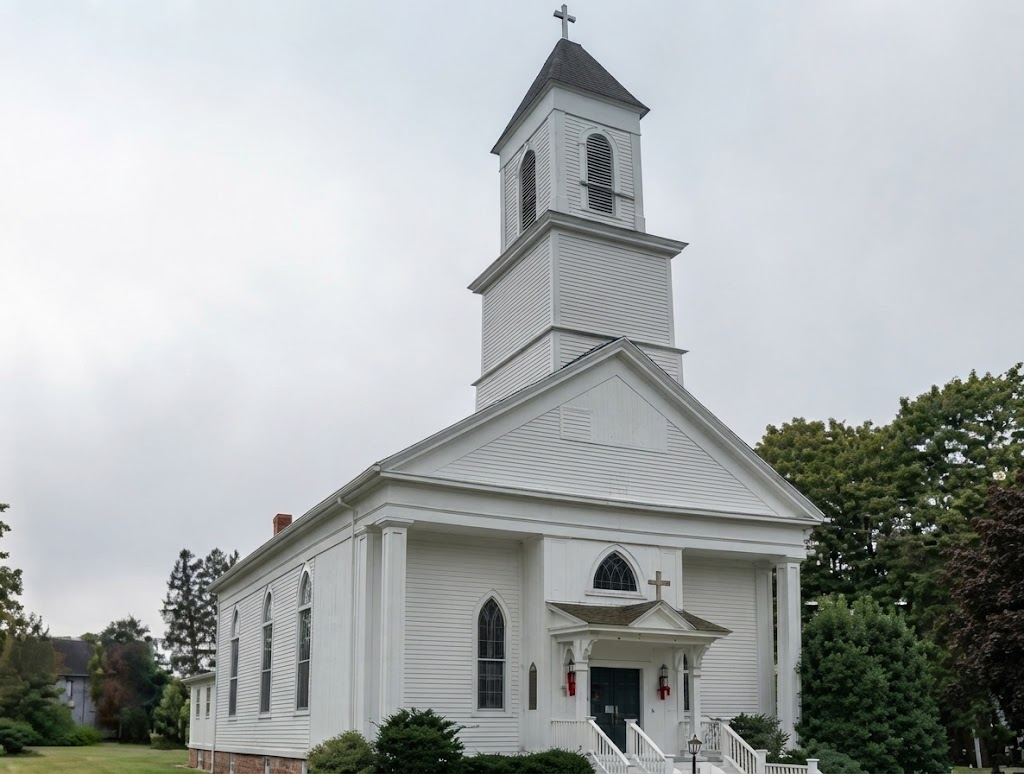
St. Mary's stood only a few miles from Warren — intimate enough for a smaller congregation yet dignified and recognizably a church. The terms were extraordinary: one thousand dollars per month, heat included, maintenance included. Emmanuel accepted the offer and began leasing St. Mary's. The move made possible the sale of the large property in Warren, and the proceeds gave the parish a financial stability it had not known for years.
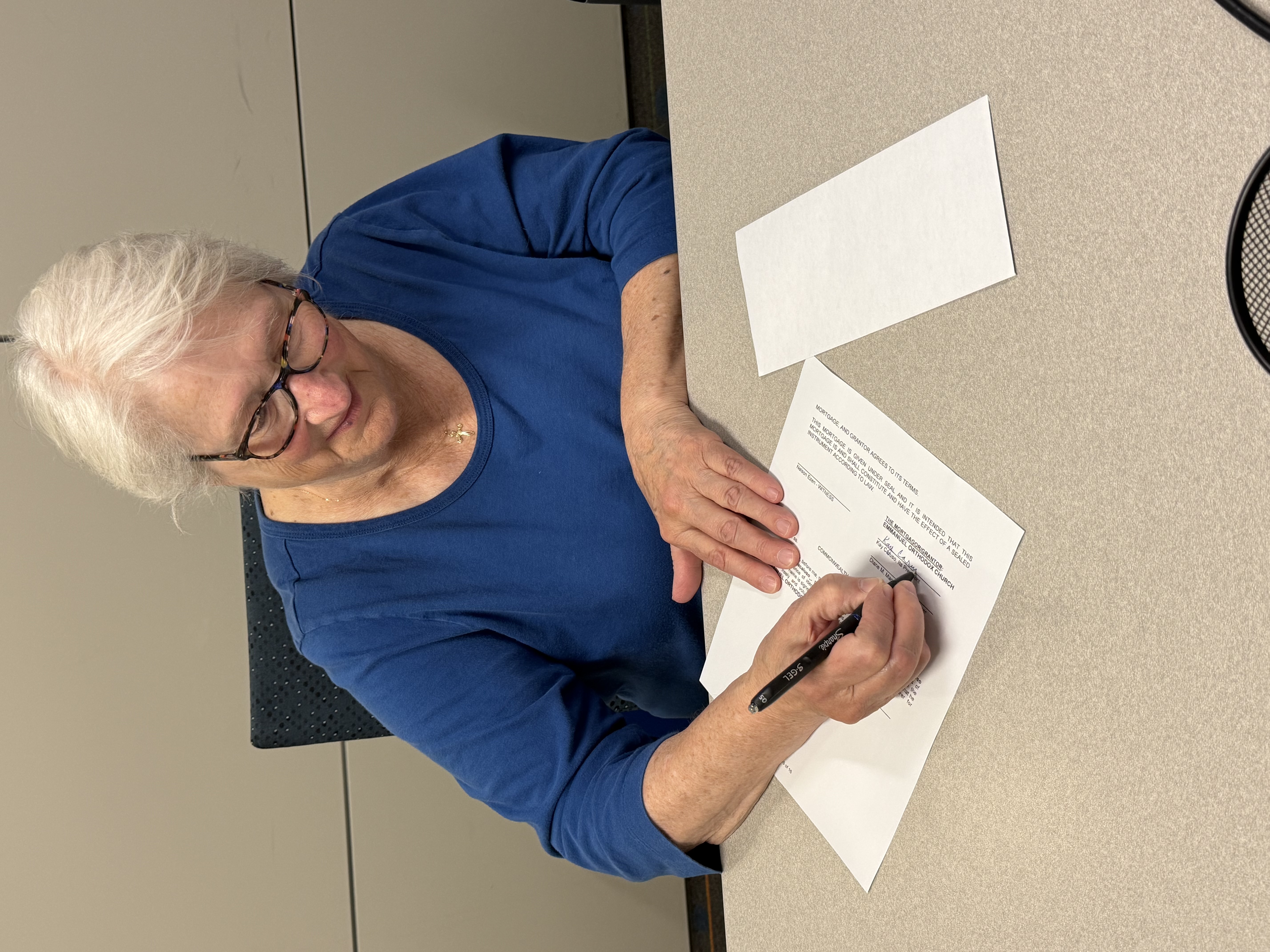
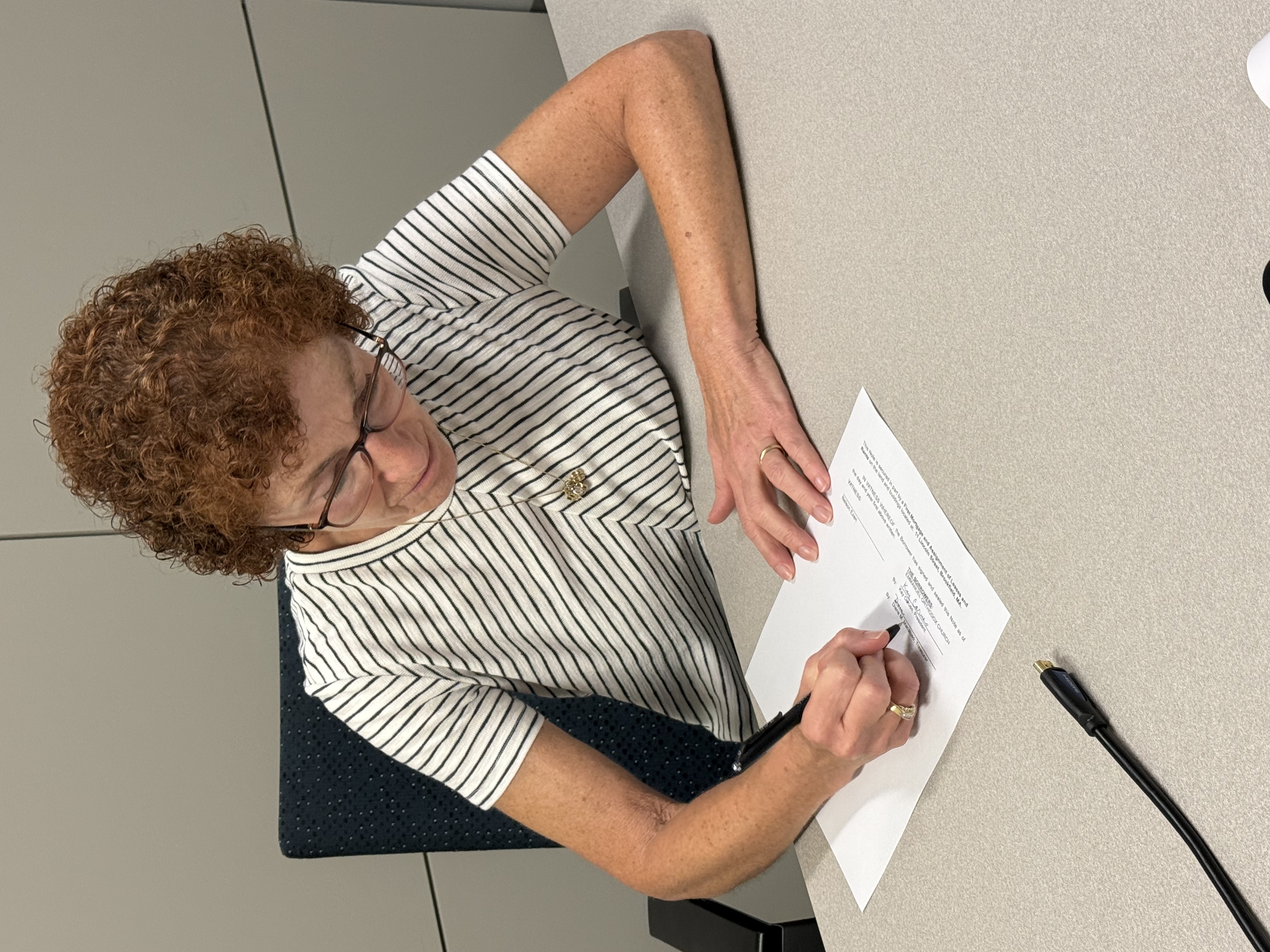
In July 2023 Father Joe called once more. St. Mary's would be closing its doors permanently, and he asked whether Emmanuel was interested in purchasing the building. The parish, after prayer and deliberation, moved forward. On September 17, 2026, the purchase was completed: Emmanuel's parish council president and treasurer signed the final papers, and St. Mary's Catholic Church in Brookfield became the property of Emmanuel Orthodox Church — the parish's own, at last.
In the years at St. Mary's the congregation has begun to grow again. The long process of becoming fully Orthodox — liturgically, spiritually, and culturally — has reached a settled maturity. What began in a living room in West Brookfield, passed through a train station, a borrowed Methodist sanctuary, a grand church on a hill, and seasons of both loss and provision, has found a fitting — and now permanent — home in Brookfield. God has continued to supply what was needed at each turn. The story is not finished.
The Story Continues
God has continued to supply what was needed at each turn. We invite you to become part of the next chapter — to worship with us, to seek the ancient faith, and to find that here, too, God is with us.
“Come and see.” — John 1:46